
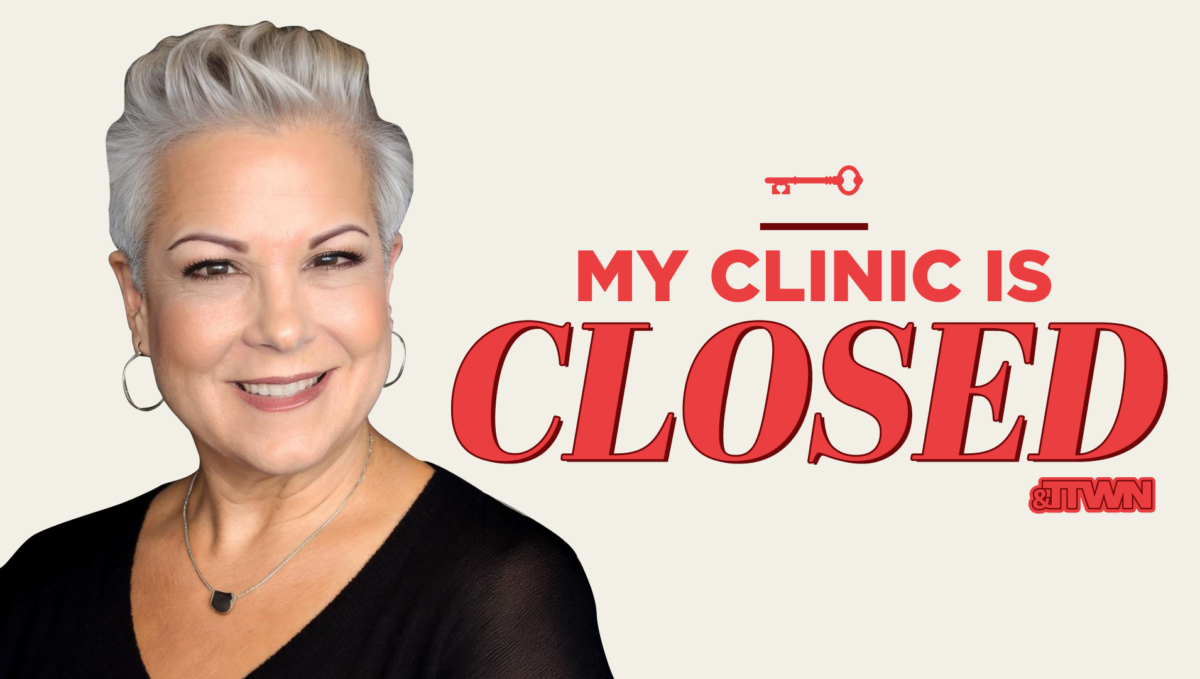
Margie’s story begins in a place where abortion was never discussed.
She was raised in a Catholic family in Connecticut, in a home shaped by tradition, culture, and silence around the kinds of things families often did not know how to talk about. Her father, as she describes him, was an old-fashioned Sicilian man. The family went to church every Sunday, but topics like pregnancy, sexuality, and abortion were not part of ordinary conversation.
“No, it was never discussed,” Margie remembers. “We really didn’t talk about anything like that.”
She never thought much about abortion at all, until she was fifteen years old and found herself pregnant.
Even then, deep down, Margie says she never believed abortion was right. But fear has a way of drowning out conviction, especially in the heart of a young girl who feels she has nowhere safe to turn.
The year before Margie became pregnant, her cousin, who was only a year older than she was, had also become pregnant and ran away from home with her boyfriend. Margie remembers her father’s reaction clearly. After that happened, he told her that if she ever came home pregnant, he would “put a gun” to her stomach and kill her and the baby.
Margie believed him.
“We had guns,” she says.
So at fifteen, under the weight of fear and pressure, Margie had an abortion. Later, she would learn that she had been carrying twins. The abortion took place at a Planned Parenthood in New York. She was farther along than she should have been for the procedure, but no one told her that beforehand. Afterward, someone in the room told her there had been twins and even identified their sex, a detail that confirmed to Margie that she had been farther along than she realized.
That abortion marked her life in ways she did not fully understand at the time. She carried shame, and her self-esteem plummeted. She struggled in relationships and felt a need to confess her abortion early, as if she had to test whether someone could still accept her after knowing what she had done. The man who did accept her became her husband, but the marriage was painful and messy. He was an alcoholic, and the relationship became another part of a life already carrying deep wounds.
For years, Margie suffered from what she now recognizes as post-abortion symptoms. She experienced anniversary reactions. Later, when she became a nurse, she refused assignments in pediatrics. She would trade them away because she could not handle being in that room. She would not attend baby showers.
“I just couldn’t do it,” she says.
But before Margie became a nurse, before God began to gently dismantle the lies she had believed, her life took another turn that placed her inside the very industry that had wounded her.
After a difficult season working in a bar connected with organized crime, Margie lost her job. It was the first and only time in her life, she says, that she was unemployed. In those days, finding work meant opening the newspaper, circling ads, and making calls. Margie had always been interested in the medical field. She had worked as a dental assistant before, and when she saw an ad for a medical assistant at a “women’s surgical facility,” she was intrigued.
“I love surgery,” she says. “I love blood and guts. So I thought, well, this would be interesting.”
When she interviewed, she did not immediately realize it was an abortion clinic. The administrator was friendly and hired her on the spot. Margie even remembers accidentally opening a closet door instead of the office door when she tried to leave, making everyone laugh. It felt casual, welcoming, and totally ordinary.
The facility was a private abortion clinic in Connecticut. Margie started as an instrument washer. She needed a job, wanted medical experience, and saw the position as a step toward something in health care.
Gradually, her role expanded. She went from washing instruments to helping bring women into the preparation room and helping them change. Then she worked in the recovery room, a place that would haunt her later.
To Margie, the recovery room became one of the saddest places in the world. If abortion was supposed to solve a problem, she wondered, why were the women not relieved? Why were they not happy?
Instead, the room was full of tears. “They were all crying,” she says. “It was just a room full of tears.”
Margie pushed away the sorrow. She had already had an abortion herself, and she found ways to justify what was happening around her. She absorbed the language of the industry. She believed the arguments that abortion had to be “safe and legal,” that without clinics, women would die in back alleys, and that abortion was necessary to prevent worse tragedies.
It was not so much that Margie embraced abortion as a matter of women’s rights. For her, the justification was more personal and more painful. She had done it. And if she had done it, how could she stand against it?
“I was trying to justify my own abortion,” she says. “I didn’t know how to go against it if I already did it.”
So instead of resisting the industry’s language, she came into agreement with it. If she could not beat them, she joined them.
Eventually, Margie was brought into the procedure room for first-trimester abortions. Her job was to stand beside the physician, empty the contents from the suction machine, and examine the tissue to make sure the placenta had been removed. She looked for the small signs that told them the abortion was complete.
From there, she moved into second-trimester abortions. Another assistant refused to participate in those because she did not believe in second-trimester procedures. Margie, trying to be brave and useful, stepped in. Her job was to do the parts count.
The clinic did not have a separate room for examining the remains. Margie did it right there in the operating room, out of sight of the patient, behind the doctor’s back on the counter. She would put the pieces together and let the doctor know when all the parts were accounted for.
Looking back now, Margie asks the question so many former workers ask when the numbness finally lifts: “What was I thinking?” she says. “Where was I?”
For nearly six years, Margie worked in that clinic. For a time, when she had moved back in with her parents and did not have a car, her father would drive her to work, but even he would not pull up in front of the clinic. He dropped her off a few blocks away.
Margie saw women come in for many reasons. Some were young girls. Some were women pregnant from affairs. Some had multiple abortions, and the staff would get frustrated, feeling they were using abortion as birth control. Some came because of poverty or fear that their children would not have a chance in life.
But the longer she stayed, the more numb she became, until one case broke through in a way she could never fully forget.
The clinic rarely used ultrasound. One day, the doctor miscalculated a patient’s gestational age. A first-trimester assistant was in the room, believing it would be an early abortion, when suddenly Margie heard yelling. Someone was calling for help.
The assistant ran out of the room, saying, “This is too big. I can’t do it.”
Margie ran in and found the doctor drenched in amniotic fluid, with fluid still coming from the woman and onto the floor. The doctor told Margie to support his back so he would not fall off the stool. She physically held him as he inserted the clamp and began pulling.
The first thing he handed her was a large arm.
He continued to dismember the baby. The last part removed was the head, which he crushed. Margie had to piece the baby together on the counter. As part of her work, she measured the baby’s foot to determine gestational age.
The baby was a girl. She had hair on her head. She was twenty-five weeks old.
“It was quite traumatic,” Margie says.
The patient had not been told. Once the doctor realized she was farther along, he called for anesthesia and told the nurse anesthetist to put her under quickly. No one told the woman how far along she was. No one gave her an option.
“I did not speak up,” she says. “I did not say, ‘Stop.’” At the time, she thought that once the arm came out, the baby was already dead. But later, as she looked back with a clearer mind and a changed heart, she wondered whether she could have said something. Whether she could have stopped it.
Not long after that, Margie began looking for a way out of the clinic. She had always wanted to become a nurse, so she decided to go to school.
Years passed before she truly began to understand the weight of what she had witnessed and participated in. She did not talk about where she worked and buried the memories.
Then God began changing Margie’s heart. A friend repeatedly invited her to church. Margie finally went when the friend mentioned there were a lot of single men there. She laughs about that now, but God used even that invitation. She walked into church still pro-choice. She did not walk in looking for a pro-life conversion, nor expecting God to confront the deepest wounds of her life.
But He did.
One Sunday, Margie went down to the church kitchen where the youth group was selling bread and pastries for a fundraiser. She saw a woman there and felt something unusual come over her. She barely knew the woman, but Margie looked at her and said, “I think I’m supposed to be doing something with you.”
The woman asked, “Are you a nurse?”
Margie said yes.
“Praise God,” the woman replied. “I’ve been praying for a nurse.”
The woman was the director of Hopeline Women’s Center in Bridgeport, Connecticut, a pregnancy resource center. She invited Margie to an open house at their office that Saturday.
Immediately, Margie pulled back. She was not ready. She tucked the woman’s card into her Bible and tried to move on.
But that Tuesday evening, Margie was listening to Christian radio. Dr. James Dobson had a guest named Sydna Massey, who shared her testimony about her abortions in college. At the end, Sydna said that when we get to heaven, God is going to put our unborn children back into our arms.
Margie broke. She began to cry and wondered what was happening. First the woman at church on Sunday. Now this testimony on Tuesday. She cried herself to sleep that night.
The next evening, at Bible study, a man named Rich approached her. He knew almost nothing about her, but he asked if she would help him pray for his sister, who was scheduled to have an abortion that Saturday.
Margie still was not fully convinced she was pro-life, but she said yes. Her prayer was simple: “Lord, I don’t know how to pray. But Rich asked me to pray that his sister will not have this abortion. So, Lord, stop it if You can stop it. If You can give her a dream or something that will stop this abortion. Amen.”
By Friday night, Margie remembered the open house invitation. She did not want to go, but she made a bargain with God. She would not set her alarm, and if He woke her up, she would go. If not, she would stay home.
The next morning, her eyes opened at 6 a.m.
“Okay,” she told Him. “I will do this.”
She got dressed, got in her car, and pulled out the card. The address was on Middle Street.
That was the same street as the abortion clinic where she had worked.
As she got closer, she realized the pregnancy center was almost directly across the street from the clinic. Margie parked down the street because she did not want to run into the protesters. She knew them by name.
She hurried into the building and went up to the second floor. After saying hello and getting some juice, she walked over to a large front window.
From there, Margie could see the clinic. She saw the protesters, the prayer group, and the women and girls walking through the clinic doors. Her heart began to break.
The same clinic where she had once worked was now below her, seen from the window of a place created to offer life and help. The same street that once represented silence, numbness, and death had become the place where God was awakening her heart.
Margie stood there and watched, and something inside her changed.
She later spoke with the director and shared what she was going through. She told her that she had had an abortion. She told her that she had worked at that clinic. That conversation led Margie to Linda Cochrane, the author of Forgiven and Set Free, a post-abortion Bible study. Margie took her first post-abortion Bible study with Linda. It was part of the healing she had needed for years.
God continued to weave connections through Margie’s life. After moving from Connecticut to Florida, she was invited to church by the man who inspected her home for termites. That church became her church. A woman there, knowing Margie was a nurse, invited her to interview for the board of Care Net of the Treasure Coast. Margie joined the board.
Later, she attended a Florida Family Policy Council banquet where Abby Johnson was the keynote speaker. Margie did not know much about Abby at the time. She had not even seen Unplanned yet. But she introduced herself, took an awkward picture she still laughs about, and went on.
Then, at another church event where Kirk Cameron was speaking, Margie shared part of her testimony with someone at a Save the Storks table. When he heard that she was post-abortive and had worked in an abortion clinic, he stopped her.
“You have to talk to Kirk,” he said.
Kirk Cameron told Margie she needed to contact Abby Johnson. She did, and that connection eventually led her to And Then There Were None.
Looking back, Margie sees a long chain of divine appointments: a church invitation, a woman praying for a nurse, a radio testimony, a man asking her to pray against an abortion, a pregnancy center across from her former clinic, a Bible study written by someone God placed in her path, a move to Florida, a termite inspector, a banquet, a conversation with Kirk Cameron, and finally a connection to Abby and And Then There Were None.
None of it feels random to her. It feels like God.
And then, in time, Margie learned something that brought her story back to that same street in Bridgeport once more. The clinic where she had once worked had closed.
Summit Women’s Center had once operated at 211 Middle Street in Bridgeport, Connecticut, the location Margie remembers from her years inside the abortion industry. Public records later identified Summit at that Middle Street address, and by 2002, the clinic had moved to 3787 Main Street. Reporting at the time noted that the old Middle Street building was expected to be torn down. More than a decade later, in 2015, the Main Street Summit Women’s Center also closed, with personnel citing declining abortion rates in Connecticut.
At some point, Margie went back to the original site of the clinic. But when she arrived, the building was gone. Just a dirt lot.
The sight stopped her. “I remember thinking that the soil was full of blood,” Margie says.
It was not a poetic thought to her, but the weight of what had happened there. Margie had started in that clinic as an instrument washer and sterilizer. Before she ever stood beside a doctor in the procedure room, before she ever assisted with first- and second-trimester abortions, her job had been to clean what came out of those rooms.
“I washed a lot of blood and little pieces down the drain,” she remembers.
Standing there, looking at the empty ground where the building had once been, Margie could not separate the dirt from the lives lost there. She could not look at that lot as merely an address or a former business site. She remembered the women. She remembered the recovery room. She remembered the sorrow. She remembered the baby girl at twenty-five weeks whose body she had been asked to piece together on a counter. She remembered the things she had once tried not to think about.
And yet, the building was gone. The place that had once represented so much death no longer stood.
For Margie, that moment became another sign of God’s mercy and justice. The closure of Summit Women’s Center did not erase what had happened there, nor did it undo the abortions. It did not remove the grief or the regret, but it did remind her that evil does not get the final word.
The same God who had pursued Margie’s heart was also capable of shutting doors.
He had met her across the street from that clinic years earlier, when she stood in the window of Hopeline Women’s Center and watched women walk through the doors below. Now, years later, He allowed her to stand where that building had been and see that it was gone. What remained was repentance and gratitude.
Margie knew the soil could not speak, but if it could, she believed it would testify to the blood that had been shed there. The empty lot became, in its own way, a testimony that God is not finished with any of us. A story that could have ended in shame had become a witness to the mercy of Jesus Christ.
That is why Margie tells the truth now, because remembering rightly matters, and she wants hearts to change. The closure of her former clinic is part of Margie’s redemption as a visible reminder that God can enter the very places marked by blood, grief, and silence, and begin writing something new.
But more than anything, Margie tells the truth about a God who pursues. She does not know exactly where God will take her testimony next, but she knows what she is praying.
“Lord, Your will be done,” she says.