
Contributor: ATTWN Staff
Key Takeaways:
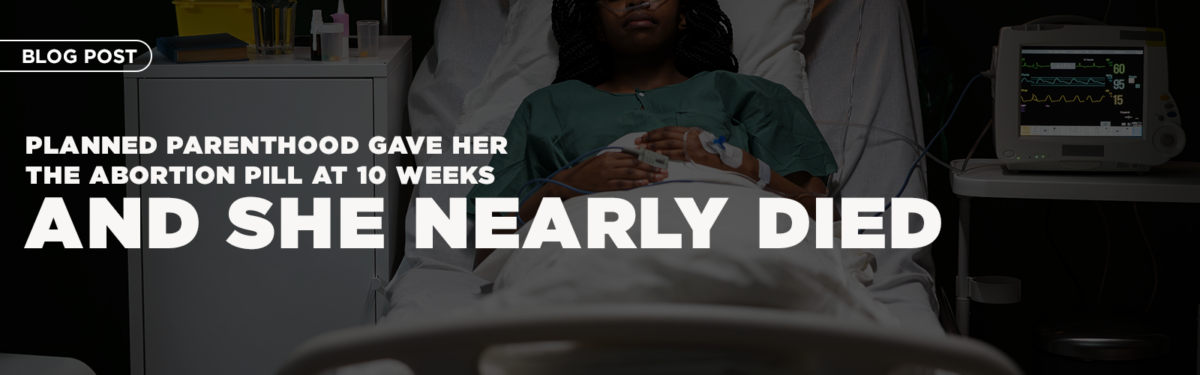
- Shanyce Thomas was given the abortion pill by Planned Parenthood at 10 weeks pregnant and received little to no explanation of the risks involved.
- She developed a life-threatening infection that went undetected, was placed in a medically induced coma for a month, and ultimately had to undergo a partial hysterectomy, which permanently ended her ability to carry children.
- Her message to Planned Parenthood: “You guys need to close down.”
A college student. A positive pregnancy test. A visit to Planned Parenthood. That’s where Shanyce Thomas’ story begins, and unfortunately, it nearly ended with her death.
Thomas was 10 weeks pregnant when she walked into a Planned Parenthood clinic and was given mifepristone and misoprostol, the two-drug regimen used to perform a chemical abortion. She was handed a packet of information and sent home.
“They didn’t really give a thorough explanation” of what the pills could do to her body, Thomas said in an interview with The Daily Signal.
What happened next is a story that Planned Parenthood’s glossy marketing materials will never tell you.
What Planned Parenthood Didn’t Warn Her About
Thomas began experiencing severe pain after taking the abortion pills. This isn’t unusual.
“I felt like I was dying,” says Abby Johnson, former Planned Parenthood director and founder and CEO of And Then Then Were None and ProLove Ministries, of her experience with an abortion pill abortion. “I thought my parents were going to find me dead on my bathroom floor with all the blood I lost.”
But Thomas returned to Planned Parenthood and wanted to know if something was wrong. They told her everything was fine and sent her home.
It wasn’t fine and Thomas’ father eventually took her to a hospital near the family’s home in Connecticut. There, doctors discovered that she had developed a severe infection behind her uterus – an infection that had gone completely undetected and had become life-threatening.
Thomas was placed in a medically induced coma for a month. When she woke up, a team of doctors had to explain that they’d had no choice but to perform a partial hysterectomy.
She was a young woman in college, just getting started with her life and just like that, her ability to carry children was gone.
“In one moment, my ability to carry children in the future was taken from me, not by choice, but by necessity to save my life,” she said.
The Consequences No One Talks About
Thomas is one of five siblings. She always imagined she’d have a big family of her own someday. That future was taken from her in a Planned Parenthood clinic, not through a dramatic, obvious act of negligence, but through the quiet, routine handing over of pills with inadequate warnings and an inadequate follow-up.
“It hits me sometimes when I see my siblings having kids,” she said. “I could still have kids, just not physically. I just can’t carry them.”
It took about five months after taking the abortion pill in early 2020 before Thomas was strong enough to return to normal life activities. Today she works as a surgical technologist and is in nursing school. She has channeled her suffering into purpose.
But she hasn’t forgotten what happened to her, and she doesn’t want other women to go through it.
Thomas’ Story Isn’t Isolated
Thomas’ story is not an isolated case. As we’ve covered extensively here at And Then There Were Non, and as Abby has talked about many times, the abortion pill is responsible for a staggering and underreported number of serious complications.
A landmark study released in April 2025 by the Ethics and Public Policy Center found that 1 in 10 women who take the abortion pill suffer severe adverse events, including sepsis, hemorrhaging, and infection, within 45 days of taking the pills.
That’s exactly what happened to Shanyce Thomas. A severe infection. Life-threatening. And Planned Parenthood missed it entirely, twice.
Yet the abortion industry continues to insist that the abortion pill is safe. They’ve called it “safer than Tylenol.” They’ve fought every attempt to restore basic medical oversight. And under the Biden administration, they succeeded in stripping away requirements that women see a doctor in person before obtaining the pills.
The result? More women like Shanyce. More infections go undetected. More trips to emergency rooms. More heartbreak
“You guys need to close down.”
Thomas isn’t staying silent. Last week, she spoke at Sen. Josh Hawley’s (R-MO) press conference announcing the Safeguarding Women from Chemical Abortion Act — a bill that would remove the FDA’s approval of mifepristone and allow women like Thomas to sue manufacturers for damages.
“I think it’s time for me to advocate for this, advocate for myself, and advocate for other women,” she said.
She is sharing her story as a Live Action fellow, hoping it reaches women before they sit down across a desk at a Planned Parenthood clinic and are handed two pills with a packet of paper that doesn’t begin to capture what could happen to them.
Her message to Planned Parenthood?
“You guys need to close down.”
Abortion Isn’t Healthcare
For its part, Planned Parenthood issued a boilerplate statement saying that “patient safety and clinical quality are always of the utmost importance” and citing privacy laws as the reason it couldn’t comment on Thomas’ specific case.
They couldn’t comment. But Shanyce Thomas can, and she is telling her story in as many places as possible.
This is the pattern we see over and over again. Planned Parenthood hands women abortion pills with inadequate counseling, fails to follow up when those women return in distress, and then issues careful legal statements when things go catastrophically wrong. And they keep their doors open. Oh, and taxpayers are still funding them.
Shanyce Thomas walked into a Planned Parenthood clinic wanting help. She came out in a medically induced coma, without her uterus, and without the future she had imagined for herself.
That is not healthcare. That is not care of any kind.
What You Can Do
Stories like Shanyce’s exist because someone chose to tell them and because there are people willing to listen and act.
If you or someone you know has been harmed by the abortion pill, we want to hear from you. Personal accounts of women who have taken the abortion pill can be found and shared at www.LittlePillsThatKill.com.
And if you know someone working in the abortion industry who is questioning whether they can keep doing this, we are here to help.
No one grows up wanting to do this work. And when they realize the harm they’re participating in, many feel trapped. We help them find a way out.
If that’s you, reach out. Get help here.
And Then There Were None is dedicated to ending abortion from the inside out — by helping abortion workers leave their jobs and find the peace and purpose they’ve been missing. Learn more at abortionworker.com.