
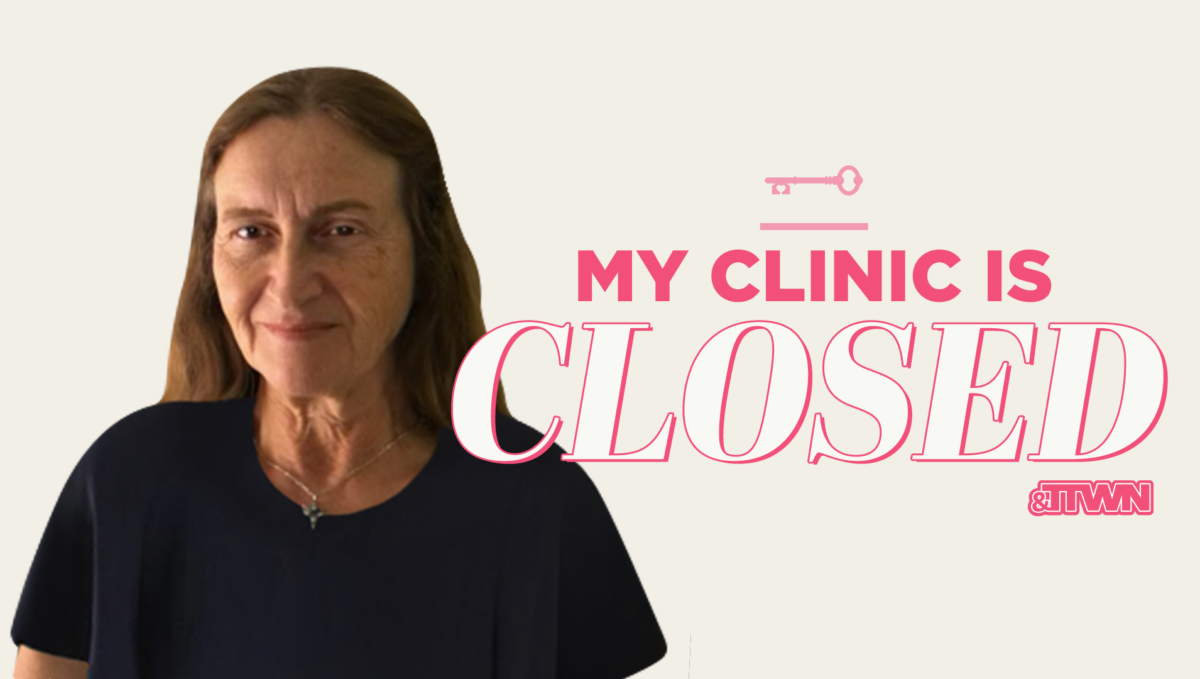
As a child, Julie Wilkinson was the kind of person who rescued chipmunks in the backyard and brought home kittens to bottle-feed. Caring for something small and vulnerable came naturally to her. It was part of her personality then, and it’s still a part of who she is today.
That’s what makes the place she eventually found herself working so difficult for Julie to reconcile.
For nearly two years, Julie worked as a nurse inside the Boulder Abortion Clinic in Colorado, assisting the infamous abortionist Dr. Warren Hern in procedures that included abortions performed at 26 weeks gestation. It was work she had once believed she could justify, in part because of the beliefs about abortion she had grown up with and in part because her years as an ICU nurse had taught her how to separate her emotions from the difficult things happening in front of her.
Julie grew up in a liberal household where abortion was accepted as part of a woman’s right to choose. Her father was a physician, her mother was a nurse, and her parents supported organizations including Planned Parenthood and NARAL.
“It wasn’t really until I was in high school that I even was really aware of the whole abortion issue,” Julie said. “I grew up thinking that people should have access not just to birth control but to abortion if they wanted to have it.”
Julie even remembers her mother saying that while she did not believe she would personally have an abortion, she thought other women should be able to.
“And so that’s sort of the opinion I ended up embracing,” Julie recalled.
Years later, that foundation would make accepting a job in an abortion clinic easier than Julie now wishes it had been.
After nursing school, Julie worked in an ICU in Florida. Following a breakup with her boyfriend, she decided she needed a change and moved to Boulder, Colorado, where a friend from nursing school had settled. Julie hoped to find another hospital job, but there were no ICU openings or other positions that interested her.
Then she saw an advertisement for a women’s health clinic.
“I wasn’t completely aware of what that actually meant,” Julie remembered. “And I went ahead and interviewed and discovered quickly that it actually was an abortion clinic.”
For Julie, abortion had been normalized for so long that the discovery did not immediately deter her. Her time in intensive care had also taught her how to push emotion aside when necessary so she could function in difficult situations.
So, Julie took the job.
The clinic made no attempt to disguise what happened inside. While other abortion businesses used names centered on women’s health or family planning, this one was simply called Boulder Abortion Clinic.
“Most of them have some sort of euphemistic name: Planned Parenthood or something related to women’s health. But it was Boulder Abortion Clinic, loud and proud. So, there was no mystery about that.”
The clinic was run by Dr. Warren Hern, an abortionist who became particularly known for performing abortions later in pregnancy. Julie remembers him as meticulous about his procedures, but she also came to believe his commitment to abortion extended beyond what he framed as women’s rights. She recalls Dr. Hern’s deep concern about overpopulation, including his view that humans were “a form of cancer on the earth.” He even developed an abortion instrument that became known as the Hern dilator.
The rest of the staff was female, friendly, and supportive. They formed a close group around the work they were doing.
“It was just like being part of a girl gang,” Julie said.
That environment made it easier to accept what happened each day as normal. The women worked together, supported one another, and cared for the patients who came through the doors. Yet behind all of that was the reality Julie could not completely escape: unborn children were dying.
At the time Julie worked there, the clinic performed abortions through 26 weeks gestation. Because many other abortion providers would not perform procedures that late, women traveled to Boulder from other states. Someone even came from Europe.
“We did the twenty-six weekers all the time,” she said. “People came from other states because they couldn’t find anyone to do it.”
Some were young women or minors who had hidden their pregnancies until they were far along. Others had received prenatal diagnoses and did not want to continue their pregnancies. The later abortions took place over several days because the woman’s cervix had to be gradually dilated before the procedure could be completed.
Julie’s years in the ICU had taught her how to grow what she called a “thick skin.” Nurses cannot stop functioning every time something tragic happens in front of them, and Julie had learned how to compartmentalize her emotions in order to keep doing her job. She carried that skill into the abortion clinic, where it helped her separate herself emotionally from what was taking place.
But assisting with abortions meant Julie was not dealing with it as an abstract political issue anymore. She was standing in the procedure room. She was seeing with her own eyes what happened to each unborn child.
“The reality is you’re his assistant. You’re seeing little parts. You’re seeing little arms, little legs, little faces.”
For a woman who had spent her childhood rescuing animals, there was a profound contradiction in being able to suppress her compassion for the human beings whose bodies she saw during abortions.
“These were actual human beings. And it’s really frightening because you can end up justifying terrible things.”
And that was exactly what Julie had learned to do. She found ways to justify what she was seeing so that she could continue doing her job.
“I always thought to myself: Well, I’ll never have one.”
She also reasoned that the woman seeking the abortion would not have been a responsible mother anyway.
“It was just another mind game, another way of trying to justify the fact that I was taking a check for helping to end somebody else’s life,” Julie said.
Julie’s journey out of the abortion industry—and eventually into the pro-life movement—was already underway, but she didn’t know it. There was no single dramatic moment when everything changed. Instead, her story unfolded gradually.
After about two years at the abortion clinic, Julie came across an advertisement from the Wyoming Air National Guard looking for flight nurses. Always drawn to adventure, she decided to pursue it. And through the Guard, she eventually met the man who would become her husband.
By that time, Julie had already decided to leave the abortion clinic. She took a nursing position at the University of Colorado, and her new workplace couldn’t have been more different from the one she was leaving behind.
Julie went to work in a Level III newborn nursery, caring for premature babies and helping them survive.
“I absolutely loved it,” she recalled. “Loved working with those tiny babies. Loved helping contribute to them surviving.”
The irony was not lost on her. After spending two years handing instruments to an abortionist, Julie was now devoting her skills as a nurse to preserving the lives of tiny, vulnerable babies.
Looking back, she sees God’s hand in that transition.
“I think that was God’s way of helping heal my heart,” Julie said. “Because I had once handed instruments to somebody that was tearing people apart. So, this was an opportunity to do something good.”
When Julie married, she moved to Wyoming and left Colorado behind. She was no longer working in the abortion industry, but physically leaving the clinic was only the beginning. Her beliefs did not change overnight, and neither did the way she understood what she had participated in.
“I wish I could say I woke up one morning and, you know, became a sane person, but that’s not what happened. It did take some time.”
Slowly, Julie found herself drawn toward pro-life material. She read articles and testimonies, even when part of her initially felt resistant or resentful toward them. She listened to Christian radio and heard short segments about abortion from Priests for Life and Dr. James Dobson. Piece by piece, the truth she had spent years rationalizing began working its way into her heart.
“He’d say some facts about abortion and all this stuff worked on my heart the way it needed to,” Julie said.
Her work as a nurse was also changing her heart as she cared for premature infants and, later, newborns. She and her husband also began building their own family. Their first pregnancy ended in miscarriage, a loss Julie remembers as another part of the process God used to help her understand the value of the lives she had once helped end.
“It was a jagged, wiggly road that I followed, but at least it got me to the right place.”
Julie eventually became firmly pro-life. But with that conversion came another painful reality: she now had to live with knowing exactly what she had done. She had shared her abortion work with very few people, and once she became pro-life, that secrecy turned into shame.
Julie and her husband eventually had three daughters, and she was determined to give them something she had not received growing up: an unwavering understanding that human life is precious.
“I had not gotten that message from my family that life is precious at any stage. So, I made a really strong effort with my daughters.”
All three of Julie’s daughters became pro-life. All three also followed their mother toward nursing, with two working as nurses and the youngest currently still in nursing school.
But for years, they did not know about their mother’s past.
Julie was afraid to tell them. She was a pro-life mother raising pro-life daughters while carrying the secret that she had once assisted in abortions. She wondered whether anyone else who had left the abortion industry felt the same way.
Eventually, Julie found an online discussion board and mentioned anonymously that she had once worked in an abortion clinic. Someone responded that she needed to talk to Abby Johnson.
Julie did not know who Abby was, but she soon found a way to contact her, and Abby became the first person outside the abortion industry with whom Julie felt she could truly unload the burden she had been carrying. Abby was also organizing her first retreat for former abortion workers, and Julie decided to attend.
There were only about seven former workers there.
“Just being able to unload and talk to people was a big help for me,” Julie remembered.
For the first time, Julie was surrounded by people who understood the strange and painful road she had walked. Their experiences were different, but they understood what it meant to have participated in abortion, to leave, and then to face what they had done.
This healing process also helped Julie find the courage to tell each of her daughters about her past. She waited until she believed they were mature enough to understand, telling them one at a time. She feared they might look at her as a hypocrite.
Instead, they responded with grace.
“The Lord blessed me with them having understanding,” Julie said. “They were able to handle what I shared with them. And I’ve always been so thankful for that.”
Over time, the past Julie had worked so hard to conceal became something she was willing to share if it could help someone else. She spoke about abortion at her church. She became more open about her testimony. When Abby asked her to appear in the film Unplanned, Julie agreed, knowing that being seen on screen might mean people who had never known about her past would finally discover it.
In the film, Julie played an abortion worker, stepping back into a role she knew all too well.
“I thought it lent some validity to have someone who’d actually worked in the business,” she said.
By then, Julie had learned that telling the truth about her past did not have to mean living forever beneath its shame. Her story could become a way to reach people still trapped in the same rationalizations that once kept her inside the clinic.
“‘Nobody’s too late for God’ is the big message for me. You can ask for forgiveness and be forgiven, even for doing something as terrible as what I did,” Julie said.
Then, years after Julie had left Boulder and built an entirely different life, she learned something else.
The clinic where she worked had closed.
Dr. Hern had retired, and he had not found someone to take over the practice. The clinic that had once received women from across the country for abortions, including abortions later in pregnancy, was no longer operating.
“It made me super happy,” Julie said. “I was really glad that he hadn’t found anybody.”
Its closure cannot undo what happened inside the Boulder Abortion Clinic. Julie knows that better than most. She cannot change the procedures she assisted with or give back the lives that were lost there. But she can decide what she does with the life God has given her now.
“I can’t change what I did, but I can try to change what other people do.”
Today, Julie is a mother and grandmother surrounded by a family that treasures life. And the woman who once felt too ashamed to tell people where she had worked now speaks openly because she knows there may be someone listening who needs to hear that leaving is possible.
“It’s not worth the emotional and mental price you pay,” she said. “Because unless you’re a bona fide sociopath and don’t have any feelings, at some point, it’s gonna bother you. It’s just not worth it.”
Julie knows how easy it is to justify staying. She did it herself. She knows how someone can become surrounded by people who reinforce the same beliefs, learn to suppress what they see, and tell themselves whatever they need to hear in order to return the next day.
But she also knows that the story does not have to end there.
Workers can leave. Beliefs can change. Shame can give way to forgiveness. A life once used to participate in abortion can become a life used to expose it. And through Christ, even a past that seems impossible to redeem can become a testimony to the power of grace.
Julie cannot change what happened inside the clinic where she once worked. But that clinic does not define who she is today. The compassion that had been part of her since childhood was not gone forever. Through years of conviction and healing, God brought it back to the surface and gave Julie the courage to use her past in defense of the lives she once helped end.
Today, she is living proof that no one is beyond redemption.
“Anything that I can do to reduce abortions is a win. That’s my hope,” Julie said. “Abortion has become so common, and I want it to be uncommon again.”