
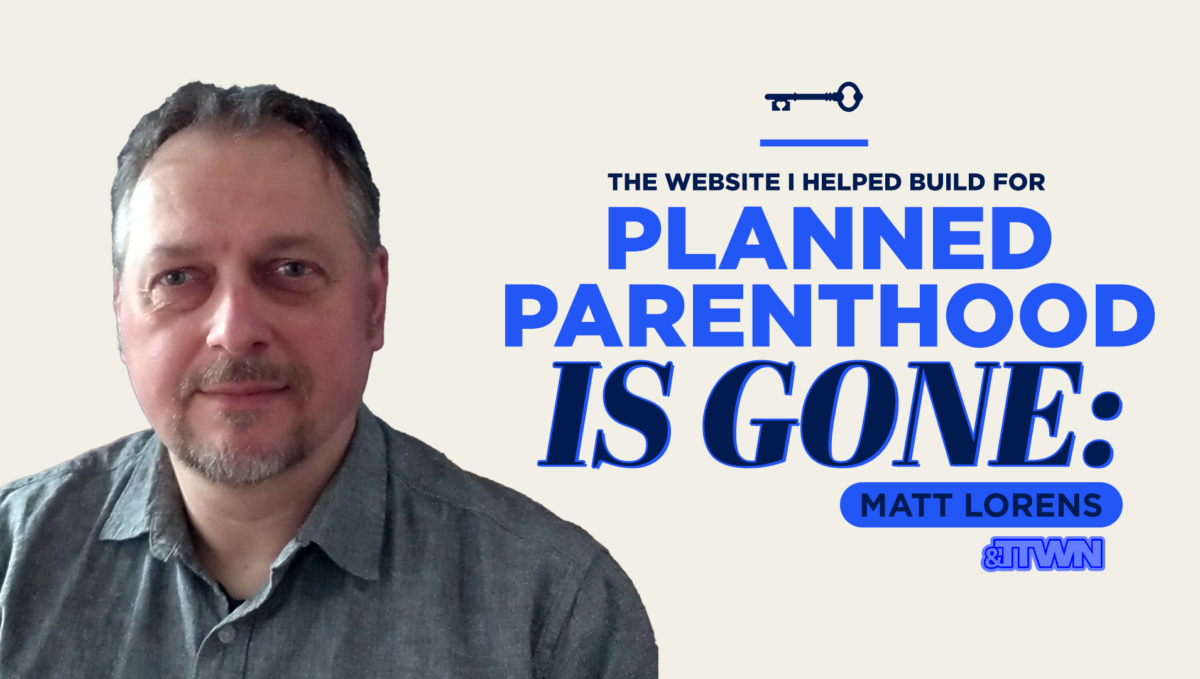
Matt Lorens knows what it means to leave everything behind.
At 15 years old, he left communist Poland with his family and came to the United States, carrying little more than a work ethic, a sharp mind, and the willingness to start over. At such a young age, Matt had already lived long enough under communism to understand what it felt like to grow up inside a system that tried to control people, shape their thinking, and force its own version of reality.
“I was 15 when I came over,” he recalled. “I spent enough time in Poland as a kid to be aware of what was going on as far as the system that was enforced onto us.”
Even as a boy, there was something in Matt that resisted that kind of control.
“We had to learn Russian as a requirement in school, but I chose not to do that because I didn’t want to learn the language of our enemy,” Matt said. “So, I tore up my Russian book and threw it in the garbage.”
That same instinct would serve Matt later in life more than he could have imagined. But first, he had to find ways to survive the upheaval of immigration.
After arriving in the U.S. in July 1987, Matt entered high school almost immediately, not knowing any English. That’s a significant challenge for a teenage boy who doesn’t know anyone. But Matt is not the kind of person to sit back and wait for life to become easier. He adapted quickly, learning the language fast enough not only to keep up but to excel.
“I had to learn English in a year to be able to function. But soon, I was tutoring math to other students after a year of being here,” Matt remembered.
That determination was not accidental. It came from the kind of life where nothing is handed to you, and everything costs something.
“I wasn’t handed anything. I had to earn everything on my own,” Matt said. “You have a different value system when you go through all that on your own.”
While excelling in high school, Matt also got a job that helped him understand the value of money and the importance of responsibility.
“I bought my first bicycle for my first job in high school,” he recalled. “Then I bought my first car when I was still in high school with my own money, so I appreciate the value of money and work.”
That one line says a lot about the kind of man Matt was becoming. He was not drifting through life. He was building one. And after graduation, he made a difficult decision, knowing his family could not finance his education.
“I joined the U.S. Army as a medic and a nurse,” Matt said. “And part of the reason was because I needed money to pay for my college. My parents couldn’t afford it for me, so I was kind of on my own.”
The Army gave Matt discipline, structure, and a deeper sense of duty. He served for eight years while continuing to prepare for the future. He was trying to make a life, trying to provide, trying to do what so many men do: keep moving, keep working, keep building. After completing his time in the Army and his college degree in nursing and biology at Queens College in New York, Matt thought he would be a doctor. But those plans soon changed.
Matt had started to get into computers, web design, and web development. And one day, while working for his father’s business cleaning skyscrapers in New York, Matt met a man who worked as an IT professional at Planned Parenthood’s headquarters—an organization he was unfamiliar with. He learned about a job opening, got an interview, and was hired as an IT professional and web developer.
“I had no idea what Planned Parenthood was at that time,” Matt said.
And that matters because Matt’s story is not the story of a man who set out to promote abortion. It’s the story of a man who got pulled into a system while trying to support himself and build a future.
Once inside, the distance of corporate life made that easier.
“As a web developer, you sit in your cubicle in a corporate office all day, and you see code on the screen,” Matt recalled. “You never see patients. You never see pregnant women. You never see any of that. It’s a strictly corporate office. You might as well be working in a bank.”
And that is how Matt treated it—like a job. He worked on Planned Parenthood’s national website, helping build the digital infrastructure that guided people to services and affiliate locations nationwide. He also worked on Teen Wire, a site specifically designed to attract teenagers and normalize Planned Parenthood’s worldview.
At first, Matt was not focused on the content itself.
“I didn’t really care so much about what the company did because I was working on the backend programming and things like that,” Matt said. “I was pretty much coding all day.”
But even from the technical side, he began to see how deliberate everything was. The national site was built to bring people into the Planned Parenthood system. Teen Wire was built to appeal to young people with interactive content, video, polls, and sexuality-based messaging. It was sleek, colorful, strategic, and designed to create customers. The site also received heavy funding from a well-known foundation.
“None of this would have happened without the Bill Gates Foundation and their donations,” Matt said. “Maybe Teen Wire wouldn’t have even existed, or if it did exist, it wouldn’t have been as sophisticated as it was.”
The deeper Matt got into that world, the more he noticed the language. Planned Parenthood knew exactly how to package itself.
“They would always mask abortion and their work as women’s health, and that always sounded so positive,” Matt said. “But I began to realize that it shouldn’t have been. It was negative because at the end of the day, Planned Parenthood was killing children, unborn children. But they tried to make it all about women’s health and women’s choice.”
That insight hits even harder when you remember where Matt came from. He had already seen what it looked like when institutions used language to soften reality. He had already lived under a system that relied on people accepting the official story. And now, years later, in America, he found himself inside another machine that also depended on messaging, euphemism, and moral confusion.
Still, he did not leave right away.
Matt says plainly now that part of the reason was spiritual blindness and addiction to pornography.
“I was not close to my faith at that time, which is probably one of the main reasons why I was so blind to what was really going on,” Matt remembered. “Plus, I was also addicted to pornography at the time. So I made excuses because I wasn’t 100% right myself. I was never pro-abortion. I was never thinking in that way. But at the same time, I was blind.”
That honesty is important. Matt does not tell his story as though he instantly saw the truth and heroically walked out. He tells it as a man who drifted, compromised, and slowly woke up. That is exactly why his story matters to people still inside the industry now. He understands how it happens. He understands what blindness feels like.
And yet, even in that blindness, God’s grace was at work.
During his time at Planned Parenthood, the organization moved its headquarters, and directly across from the office was St. Michael’s Catholic Church. That prompted Matt to start going to Daily Mass.
“They had a mass in the middle of the day at St. Michael’s. Maybe a few people showed up. And so, I would go to a half-hour mass during the day,” Matt recalled.
Imagine that contrast. Half a day spent helping build digital tools for Planned Parenthood, and then a half hour at Mass. Day after day, step by step, Christ was drawing Matt back, even as he was still employed within the very system that opposed the truth his faith proclaimed.
He even began attending the Latin Mass.
“I think maybe even before I quit, I found out about the Latin Mass, and I got interested in it. I kind of fell in love with the Latin Mass.”
As Matt’s faith deepened, the disconnect between what he believed and where he worked grew harder to ignore.
During this time, Matt also had a close enough vantage point to observe Planned Parenthood leadership from the inside, including its former president, Cecile Richards. He attended corporate meetings, heard her speak, and watched the mentality driving the organization at the highest levels.
Although he had already left Planned Parenthood by the time of her diagnosis, Matt remembered something that deeply affected him: even after learning she had terminal brain cancer, Cecile Richards continued pressing forward without remorse.
“When she found out she had brain cancer, which didn’t have a very good prognosis, she continued to push for abortion so hard. There was no remorse, no repentance, nothing,” Matt said.
That stayed with him.
“You would think that when someone finds out they have a terminal illness, they would take a step back and look at their life. I didn’t see that with her.”
But even after her death, Matt did not speak with cruelty. He spoke with sorrow.
“I felt sorry for her. I just felt sorry that to the very end she would not repent for what she had done.”
Eventually, Matt reached a turning point in his life that made everything even more personal.
Toward the end of his time at Planned Parenthood, Matt’s son Michael was born with cerebral palsy and required 24-7 care. Both Matt and his wife had advanced warning and knew that their son would have serious medical issues. And that diagnosis came with a question.
“Someone once asked me, why didn’t you abort him?” Matt recalled.
His answer was immediate and instinctive.
“How could I abort? It doesn’t matter if he’s disabled,” Matt said. “If I have to take care of him for the rest of my life, that’s fine. If that’s God’s will, then I will do that.”
And that exposes the collision at the heart of his story. Planned Parenthood traffics in the lie that a child’s worth depends on things like convenience, health, and timing. But Matt and his wife have never looked at Michael as a problem to solve. He is their son to be loved.
Yet even in the midst of all this, leaving Planned Parenthood was not simple.
Matt and his wife had a home in an expensive neighborhood, taxes, cars, and no savings cushion. Plus, their child needed extensive care. Planned Parenthood offered a high income, strong benefits, raises, and security. Walking away meant risking the very stability he had spent his whole life working to build.
Eventually, Matt knew in his heart that it was time to quit. He just needed a reason. And a dispute over vacation became the practical moment of departure, but even Matt is clear that it was only the surface issue.
“They didn’t want to give me my vacation time off, and I just decided it was time to quit,” he said. “But really, I was going to quit anyway.”
Life after Planned Parenthood was not polished or easy. It was marked by uncertainty, sacrifice, and suffering. At one point, Matt and his family even lost their home in a fire. But even there, God was writing redemption.
Years after Matt had left Planned Parenthood, he learned that Teen Wire had eventually been shut down. On the surface, that might sound like a victory, but Matt sees it differently.
“Well, I’m happy Teen Wire shut down, but I’m wondering if Planned Parenthood found something else to replace it with,” he said.
That realization only deepens the weight of Matt’s story. The platform he once helped build may be gone, but Planned Parenthood’s mission behind it continues. And that’s one of the reasons he feels such urgency today to reach young people with something different.
Matt started a Catholic business. He began creating holy cards, rosaries, relic cards, and board games for children. Today, his work through TraditioCatholica.com is the complete opposite of what he once helped build.
“I started a new store online that has the largest selection of Catholic holy cards in the world,” Matt said.
He now creates resources meant to form children in truth from an early age, because he sees clearly how the battle begins young.
“My goal is to start at a very young age,” Matt said. “Just like Planned Parenthood is targeting teenagers, well, I’m targeting teenagers with exactly the opposite to prevent a lot of those evil things like abortion.”
That is such a powerful reversal. The man who once helped build systems that drew young people toward abortion and sexual confusion now spends his days trying to lead souls toward Christ, truth, and sainthood.
It was in the midst of this work that Matt came to know Abby Johnson and ATTWN. Matt heard Abby speak at a conference without even realizing who she was at first. Later, another conversation led him to look her up and reach out to her.
“I said, ‘Hey Abby, I heard your interview, and I saw you at the conference, and I used to work for Planned Parenthood.’ And so we started talking.”
With that connection, Matt’s story found a place where it could serve others still working in the abortion industry. He was no longer just a former Planned Parenthood employee carrying a hard past. He became part of a larger testimony: that people can leave, that truth can break through, that redemption is real.
And that is the deepest heartbeat of Matt’s story. He knows what it is to leave everything behind. He did it as a teenage immigrant. He did it again as a man walking away from Planned Parenthood. And through it all, God was watching over him.
Now, looking back, Matt realizes, “Had I known what Planned Parenthood stands for, I would have never accepted that job.”
But he also knows God did not waste those years.
Because now, Matt can say something to the abortion workers still inside that only someone who has been there can say with credibility: there is a way out, and there is life after this.
“There’s no in between for God. You’re either with him or you’re against him. And abortion is no different. The sooner you get out, the better.”