
Every Mother’s Day, we celebrate the women who sacrifice, protect, provide, and love—even when it costs them something.
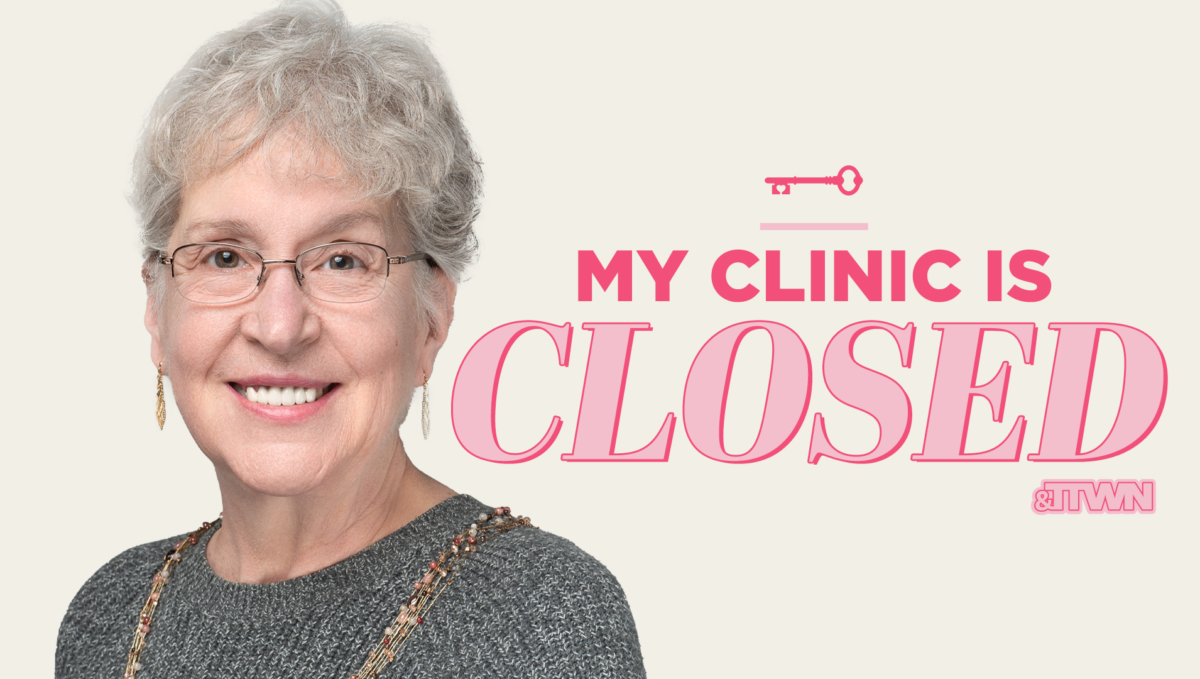
Pam Barr knows that kind of love.
Long before she became a former abortion worker, Pam was a young mother trying to survive. At just 23 years old, with two small children and only a high school diploma, she found herself fleeing for her life.
“I was met at the door one night by my drug addict husband with a loaded gun. He had gotten paranoid on his cocaine and threatened to shoot me,” she said. “It took me an hour to talk him out of having possession of that gun. When he went to put it back in the gun case, I grabbed the children superhumanly, one under each arm, a three-year-old and a seven-year-old, threw them in the car, and left.”
That was motherhood for Pam in its rawest form: fear, courage, instinct, and sacrifice all in one moment.
She stayed with a friend that night and went to her church family the next day. Pam was a brand-new Christian, not even a month into her faith, and she expected support. Some people gave it. But others told her something she could not understand.
“There was a portion of people who told me that I should go back and take the children so that I could demonstrate what the love of Christ looked like,” Pam said. “Well, I don’t know about most people, but that struck me as completely insane. And I took my anger out on God.”
That wound changed the direction of Pam’s life.
“I felt like God had turned his back on me. And so, I turned my back on him.”
Pam needed work. She needed income. She needed a way to feed her children and keep them safe. Like many mothers trapped in desperate circumstances, she was not thinking in grand moral categories. She was thinking about rent, groceries, benefits, and survival.
“I needed a job. I had kids to take care of,” Pam said. “I saw that Planned Parenthood had one open that didn’t require any further education than my high school diploma. The pay was great. The benefits were great.”
That is how Pam first entered the abortion industry.
The Planned Parenthood facility where she began working in Grand Rapids did not perform abortions at the time, but it referred women to Dr. Thomas Gordon’s nearby abortion clinic, Heritage Clinic for Women.
At the time, Pam was also going to nursing school, still trying to build something better for herself and her children. She even became known for her skill with injections and was crowned the “Depo Queen” because patients said her shots did not hurt.
After Pam graduated from nursing school, Dr. Gordon recruited her to work directly in his clinic. The job came with incentives and a strong salary. For a single mother, that mattered. It offered stability, security, and a way to keep providing.
But it also pulled her directly into abortion work. And the deeper she went into that world, the easier it became to believe the lies that held it together.
“My heart was a stone,” Pam said. “And the evil is so insidious that you begin to believe the deception. You believe you’re helping families. I truly did.”
That deception was not abstract to Pam. It had a language. It sounded compassionate. It sounded practical. It sounded like mercy.
“I thought I was saving these children from horrible lives or keeping them out of the foster system where they may have had horrible experiences, protecting them from child abuse and poverty,” Pam said. “You tell yourself that you’re giving this person a chance to finish college, or they’re not ready to be parents. There are a million excuses that people can make up, and the deeper into the evil you get, the easier it is not to see the evil and to cover up murder by lying to yourself.”
Eventually, Pam became Dr. Gordon’s second-trimester nurse.
Second-trimester abortions are not quick or simple. During these two-day procedures, the woman would come in on the first day and get their blood work, ultrasound, and informed consent 24-hour rule.
The next day, the woman returned for the abortion. Pam still remembers the instruments.
“So, for the second trimester, the woman is sedated now. He’s got his instrument tray out and opened up. They’ve all been sterilized in the autoclave. They look barbaric. They’re all metal, shiny, sterilized, and ready to murder.”
The physical reality of those abortions was something most people don’t understand, but Pam did.
“It takes a tremendous amount of physical strength to actually pull a body apart,” she said. “There were times I had to stand behind Dr. Gordon’s rolly chair and place my hands on his back to steady him as he pulled those body parts out.”
The sounds stayed with her.
“He would rip off limbs, and I’d hear them hit that pan in the bottom of the tray and count,” Pam said. “Because if we could tell in the room, it would make it easier for the POC nurse. Because we wouldn’t have to bring her back in from the recovery room if we knew that we had gotten all the limbs, the torso, and the head.”
Even now, years later, Pam has not forgotten.
“I can sometimes still wake up from a sound sleep to the sound of those limbs hitting the stainless steel pan.”
That is the hidden reality behind terms like “choice” or “women’s healthcare.” Behind the sanitized language of the abortion industry are workers like Pam, carrying memories of what they saw, heard, touched, and participated in.
There was also danger to the women. Pam remembers one patient they almost lost.
“She was hemorrhaging so bad it got to the point I couldn’t get her blood pressure anymore,” Pam said. “We were pumping her full of fluids, trying to get that blood pressure elevated and the hemorrhaging to stop.”
But even then, calling an ambulance was something the clinic wanted to avoid.
“We didn’t want to call an ambulance,” Pam said. “The optics of having an ambulance outside an abortion clinic are just not something Dr. Gordon wanted to deal with.”
Pam remembers losing track of time as they tried to save the young woman’s life.
“So, for I don’t know how long, time lost meaning to me as we were struggling to save that woman’s life. She was young. I don’t even think she was 30 years old. I ruined the lab coat because I got so much blood on it.”
Then there were the sounds from the abortion itself.
“But I can never forget the sound of those special clamps crushing the skull, so we could get it out through the cervix,” Pam said. “And that deforms the skull when you crush it. So, these didn’t all look like cute, sweet little babies. They’d been brutalized to death.”
For years, Pam lived inside that contradiction. She was a mother who had once run from danger with her children under her arms. She was also working in a place where other mothers’ children were being destroyed. And the only way to continue was to believe the deception.
“We fell so deeply into Satan’s snares that we thought we were helping women and saving children from terrible lives,” Pam said. “Really? That’s worse than being pulled apart limb by limb? How evil could that possibly be that you think that’s a good thing?”
Eventually, God began to break through.
Pam had suffered a terrible fall that left her in a hospital bed for 10 months with a broken back in three places and a shattered heel. When she returned to the clinic, still physically limited, she saw Mary, a faithful sidewalk advocate for life who had prayed outside that building for years.
Mary recognized Pam immediately.
“She was so enthusiastically glad to see me that she actually came running up to me and said, ‘Pam, we thought you had taken another job,’” she recalled. “And so having her remember me and be glad to see me was probably the very beginning of it.”
That day, because Pam was not physically able to do her usual work, Dr. Gordon had her work in the Products of Conception (POC) room. It was the place where workers examined what had been removed to make sure nothing was left behind.
Pam had seen second-trimester abortions. She had heard the sounds. She had counted body parts. But for reasons she still cannot fully explain, that day in the POC room pierced her heart.
“I think that day was the very beginning of the change,” Pam said. “As his second-term nurse, I had seen a lot of things. He would go up to 22 weeks, and I know that we did some that were 24, at least. But that day, working in the POC room and seeing all those little, tiny feet and hands, I remember thinking a couple times during the day, this is not right.”
What she saw was unmistakable.
“It just impacted me so much more deeply than the second-term babies for some reason,” Pam said. “It doesn’t make sense, but those tiny baby parts, so fully formed with little toe and finger buds on them already.”
Looking back, Pam knows what was happening.
“That’s what I think the Holy Spirit was breaking my heart with. Those tiny lives just snuffed out.”
Soon after, Pam could no longer continue the physical work. Dr. Gordon told her he no longer had a position for her. She left the clinic crying.
“I wasn’t totally converted yet,” Pam said. “But it didn’t take me long. That heart hurt wouldn’t let go of me.”
That heartache eventually led her back to church. But for 20 years, Pam kept her abortion industry past a secret.
Then, in a small group at church, she finally told someone.
“I broke down and told Shelly about my history with the abortion industry and how I hadn’t told anyone,” Pam said. “And I was crying ugly tears. It was the first time I had ever told anyone.”
Shelly connected Pam to Abby Johnson and And Then There Were None (ATTWN).
Pam remembers sending Abby an email while the song “Worn” by Tenth Avenue North played on the radio.
“The lyrics were something like, ‘I’m so worn. I want to see redemption win,’” Pam said. “And I cried so hard through that song because that’s exactly how I felt. I was so worn. I wanted to be redeemed. I wanted salvation. I wanted God to lead my life.”
Through ATTWN’s Healing Foundations, Pam began to face the truth of what she had done.
“One exercise I did during healing was to accept accountability for how many abortions I participated in,” Pam said. “And so, I counted an estimate of how many referrals I participated in at Planned Parenthood, plus working for Dr. Gordon for five years. I did the math three times because I couldn’t believe it.”
The number stunned her.
“It was 22,000 lives that I directly or indirectly helped to end, to murder,” Pam said. “When I looked at that number, I realized it was about the same size as a whole high school gymnasium full of people who would never learn what God had planned for their lives.”
Years after Pam left, the clinic where she had worked closed. Dr. Gordon had moved from the Ransom Street building to Fulton Street and later died of a massive heart attack during a bad storm. The news brought Pam complicated grief, but also undeniable relief.
“I was joyful at first. I felt my heart leap,” Pam said. “Because the first thing I heard was that Dr. Gordon’s clinic was closed. But then, when I heard it was due to Dr. Gordon’s death, I had mixed feelings because I didn’t want anyone to perish. We had prayed for his salvation for years.”
Still, knowing the clinic was closed brought healing.
“I think it helped move it along because I had assurance in my heart that no more babies were going to be murdered in that building,” Pam said.
Today, Pam volunteers at a pro-life pregnancy center and shares her story publicly so people can understand what abortion really is—and so abortion workers can know there is a way out.
This matters deeply in May, when so many people celebrate motherhood. Pam’s life shows both the fierce love of a mother and the tragic deception of an industry that tells mothers they must destroy their children to survive.
When asked what she would say to herself as a young mother, Pam did not hesitate.
“Have the baby,” she said. “I gave up a lot of what I had planned out for my life to have the baby.”
And to single mothers working in the abortion industry now—women who feel trapped, afraid, dependent on the paycheck, and unsure how they could possibly leave—Pam speaks with the tenderness and authority of someone who has been there.
“Please get in contact with And Then There Were None,” Pam said. “We have resources, temporary financial aid, resume writing, and free licensed clinical psychological help. We have Healing Foundation retreats.”
Then she added the words so many mothers need to hear:
“We’ll help you write up a new resume. We’ll help you find another job. We’ll support you if you decide to keep that baby. There are pregnancy resource centers everywhere that we can hook you up with. Just keep the baby or give it up for adoption. You do not have to kill your baby to survive an unplanned pregnancy.”
Pam knows it is not easy to be a parent. She knows fear, shame, disrupted plans, and survival. But she also knows that abortion is never the rescue it claims to be.
“It’s scary to be in an unplanned pregnancy,” Pam said. “One of the things that I was afraid of was the embarrassment and that I would have to change all my college plans, my whole plans for my whole life.”
But she knows something else now, too.
“That’s not the worst thing,” Pam said. “Embarrassment is not the worst thing.”
Now, this woman who once believed she was too dirty, too guilty, and too far gone stands in front of others and tells them what God has done.
“God forgave every evil thing that I ever did, saw, or thought. Now it’s my job to tell the world just how much He loves us and will forgive us. He wishes for no one to perish. And if he will forgive such evil as that, it’s amazing grace. There is just no love to describe what he did for us freely. All we have to do is believe and accept. And that’s why I can stand in front of people unashamedly and tell them what God has redeemed me from.”