
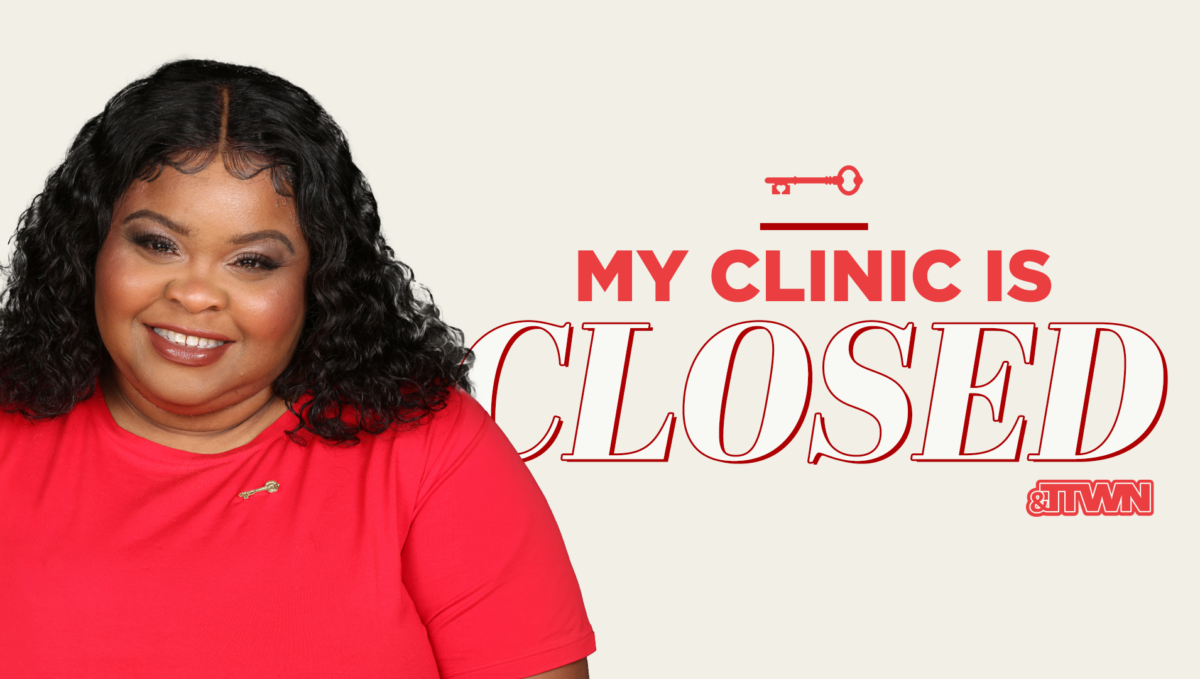
When Yolunda Davis was offered a nursing position at Delta Clinic of Baton Rouge, she was looking for a change. After years of working in long-term care, she had grown weary of the challenges that came with her job. Payroll problems, poor communication, and a stressful work environment had begun taking a toll on her, and she wanted an opportunity to continue caring for patients without sacrificing her own peace of mind.
When a friend invited her to work at the abortion clinic, Yolunda decided to give it a chance.
“I never worked in the abortion industry until I worked at Delta Clinic of Baton Rouge. So, that was my first and only job in an abortion clinic,” she recalled.
At the time, Yolunda did not have strong feelings about abortion. She approached the position as a nurse, believing her responsibility was to care for the women who came through the clinic’s doors. But as she settled into her new role, she began encountering situations that challenged what she thought she understood about the industry.
“Honestly, I was kinda on the neutral side. But once I got into it, I realized that this was not what I imagined,” Yolunda said. “Being on the inside changed my perspective.”
As a nurse, Yolunda spent most of her time preparing patients for abortions and caring for them afterward. She administered medications, monitored vital signs, reviewed medical histories, and helped women through recovery. Although she never personally observed an abortion procedure, she saw the aftermath in the clinic’s Products of Conception room, where the remains of aborted babies were examined.
The women she encountered also carried stories that stayed with her. Some were victims of sex trafficking, while others were young girls who had been sexually abused by family members or people they trusted. Yolunda met many women in abusive relationships who believed abortion was their best option.
These encounters were difficult, but they were also part of what kept her working at the clinic. She wanted to be a compassionate presence for women who were suffering, especially those who had experienced abuse or exploitation.
“The reason I stayed was to help the sex trafficking victims, and the young girls that were being raped or molested by family members,” she said.
For a time, Yolunda tried to focus on the women she was helping rather than the abortions taking place around her. But one experience would become impossible to separate from the work she was doing.
One day, a patient who was approximately 16 to 18 weeks pregnant was given Mifepristone to soften her cervix and help her dilate. Before the procedure could take place, the woman went to the restroom and unexpectedly delivered her baby into the toilet.
A medical assistant called Yolunda for help.
When she entered the restroom and saw what had happened, she put on gloves, retrieved the baby, and immediately noticed something that stopped her in her tracks.
“This is what I see. So, I’m gloved up, and I’ve got the little sterile towel or whatever. And I got the baby out of there. And my first initial reaction, this baby’s alive.”
Yolunda had never encountered anything like it. She stood there momentarily, trying to process what she was seeing, but the mother was already frightened. As the nurse, Yolunda knew she needed to remain calm.
She carried the baby into the clinic’s examination room, where staff documented the remains and called for the doctor. According to Yolunda, the baby showed signs of life but was left there until those signs ceased.
“It bothered me for days because I’ve never seen that—and to know that the baby just laid there until it stopped breathing on his own,” Yolunda said.
The experience deeply disturbed her. Although she had entered the abortion industry believing she was helping women, she was now confronting the reality of what had happened to the unborn child before her. The memory followed her home and remained with her long after that day.
As Yolunda continued working at Delta Clinic, she also began questioning certain practices within the facility. She believed some decisions made by management were motivated more by money than by patient care, and she grew increasingly uncomfortable when those decisions conflicted with her responsibilities as a nurse.
One disagreement involved RhoGAM, an injection used in certain pregnancy-related circumstances involving Rh blood-type incompatibility. Yolunda recalled that patients had previously been allowed to choose whether to receive the injection at the clinic or obtain it elsewhere. When management changed the policy, she believed patients were being pressured into purchasing it directly from the facility. So, Yolunda refused to participate.
Another conflict arose when management wanted her to complete patient paperwork in advance, before the patients had arrived for their appointments. Yolunda believed doing so could compromise the accuracy of the medical records and place her nursing license at risk.
Her concerns eventually came to a head during a Friday shift in the recovery room. She was the only nurse attending to patients recovering from abortions when an acting clinic manager confronted her about the paperwork.
Yolunda refused to leave her patients unattended.
“I said, ‘If you want the paperwork filled in, you can do it yourself. I’m not doing it,’” Yolunda recalled.
She explained that her professional responsibility was to the women in her care, not to paperwork for appointments that might never take place.
That confrontation ultimately led to Yolunda being pushed out of the clinic. After months of witnessing things that troubled her and standing her ground when she believed patient care was being compromised, her time at Delta Clinic had come to an end.
Fortunately, Yolunda had maintained a part-time position at her previous workplace, allowing her to return to long-term care full-time. But leaving the abortion clinic brought more than a change in employment. It also gave her an opportunity to begin addressing the emotional and spiritual weight she had been carrying.
For much of her time at Delta Clinic, Yolunda had kept her employment a secret from family and friends.
“Honestly, I felt kinda ashamed, and I didn’t wanna be judged,” Yolunda remembered.
To her relief, her loved ones did not respond with condemnation once she told them. But after Yolunda left the clinic, they began noticing a change in her demeanor. The stress she had carried was slowly lifting, and she was beginning to feel like herself again.
“My mood was changed. I was not on edge,” she said. “I was back to being me. I felt free.”
Around the time Yolunda left Delta Clinic, a sidewalk counselor noticed the tears in her eyes and approached her. Rather than judging her for where she had worked, the woman offered encouragement and handed her a card for And Then There Were None.
Yolunda held on to that card. Two days later, she made the call.
“That was a Saturday,” she recalled. “And Monday, I made the call with the card. And it was to my tribe now: And Then There Were None.”
Through ATTWN, Yolunda discovered a community of former abortion workers who understood experiences she had struggled to explain to others. She attended a healing retreat, shared her story, and connected with people who had faced similar challenges. What meant the most was knowing that the people offering support genuinely cared about her.
“It was just nice to know that the people that were there to help me on this journey were genuine,” she said.
Her faith was also an important part of that journey. Yolunda had grown up in a Baptist household, surrounded by Scripture and the love of her family. She was baptized as a young girl and had always believed in God, but her experiences in the abortion industry left her wrestling with questions about her choices and her relationship with Him.
As she began healing, she turned to God for forgiveness and found comfort in His grace.
“I felt he frowned down on me, but I asked him for forgiveness. And thankfully, he’s a loving and forgiving God,” Yolunda said.
While Yolunda was rebuilding her life, the clinic she had left behind was approaching an ending of its own.
Delta Clinic of Baton Rouge had a troubled history that extended well beyond Yolunda’s time there. Owned by Leroy Brinkley, the clinic had been the subject of serious concerns long before she arrived.
In 1999, a woman identified as “Denise Doe” suffered severe complications following an abortion at Delta Clinic. Subsequent investigations identified serious sanitation and medical-practice concerns at the Louisiana facility, including surgical instruments used on multiple patients without being sterilized, rusty dilators, and improperly secured drugs.
Brinkley’s abortion facilities had also faced scrutiny in multiple other states. He even employed the infamous Dr. Kermit Gosnell at his abortion facilities in Delaware, where Gosnell performed late-term abortion procedures before his arrest and subsequent murder convictions.
Yolunda recalled concerns about the clinic’s ownership and management during her employment, although she was uncertain about some of the details. What she knew for certain was that Delta Clinic eventually closed following the legal changes in Louisiana after the Supreme Court overturned Roe v. Wade in 2022.
She first heard the news from a former coworker, and it left her feeling excited.
“I’m not gonna tell you the words that I said…” Yolunda exclaimed.
Meanwhile, she had been building a new life and rediscovering just how fulfilling her work as a nurse could be.
She returned to school, continued her nursing education, and became a registered nurse. Eventually, she transitioned out of long-term care and began working with children who have special needs, providing nursing services in their homes.
The work has brought her a renewed sense of purpose.
“My life is great because I do pediatric with special needs kids. I take care of babies in their homes. I take care of special needs kids,” Yolunda said. “It’s a whole different world. It’s less stressful. Honestly, it’s the best years of my life right now.”
Yolunda has developed close relationships with the children and families she serves. She takes pride in providing consistent, compassionate care and in helping children make progress, even when they face significant medical challenges.
One little girl, Chloe, became especially dear to her.
Chloe was receiving dialysis when Yolunda began caring for her. She was spirited and strong-willed, and some nurses had struggled to get her to cooperate with her treatment. But Yolunda approached her with patience, clear expectations, and plenty of affection.
Over time, the two developed a special bond. Yolunda accompanied Chloe to medical appointments, encouraged her to take her medication, and rewarded her efforts with small treats and outings. Chloe began responding to the routines they established, and her medical team noticed improvements in her laboratory results.
Although Chloe eventually passed away at six years old, Yolunda treasures the time they shared. For Yolunda, caring for Chloe was a reminder of how deeply she loved being a nurse and how meaningful it was to be part of a child’s life, even for a short time.
“It broke my heart, but her initial prognosis was only like three years of life,” Yolunda remembered. “She surpassed that. And the time I had with her let me know that I was doing something right, that I was on the right path.”
Looking back, Yolunda sees God’s hand in the opportunities that followed her departure from Delta Clinic. The burdens she once carried have become lighter, and the life she has built is filled with work she loves, meaningful relationships, and a faith that continues to sustain her.
“I feel like a dark cloud has been lifted from over me. I feel a sense of comfort, lightness, not heavy hearted. And that clinic being closed is just…it needed to be closed.”
Yolunda knows there are other abortion workers who may be struggling with the same fears and questions she once carried. She hopes her story will encourage them to believe that leaving is possible and that their past does not have to determine their future.
Her message to anyone still working in the abortion industry is simple:
“Get out. It’s not worth your soul. Get out. There’s a better way, and I’m hoping that my story lets you know that there’s a light at the end of the tunnel.”